
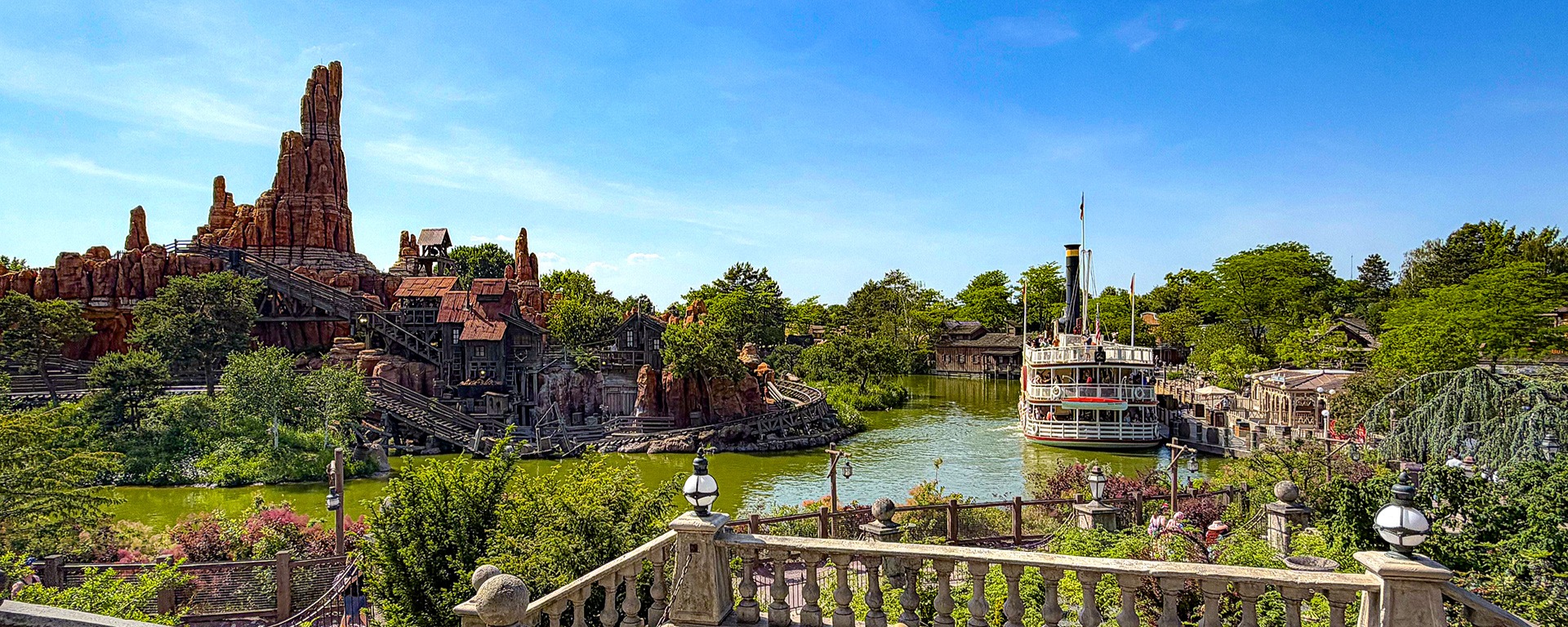
Entertainment is a very important aspect of our lives. Have you ever wondered how amusement parks actually come to be? The ability to create miracles, to captivate, and to give others unforgettable experiences is a unique, distinct talent.
When we were children, it seemed to us that miracles happened on their own. But as we grow up, we begin to realize: behind every fairy tale, there is a specific creator. We cross the threshold of such a park and, in a way, legally reclaim our right to childhood wonder. It would seem that in this space of joy, we should all feel the exact same thing — unconditional happiness. But it is here, in a grand amusement park, that a wondrous thing suddenly reveals itself: just how unique we all are, and how individually we perceive this world.
Take a close look at how people choose their route in this space.
Someone is almost running, because they need drive, adrenaline, and speed, where the heart skips a beat from the rise and fall. For them, joy is a challenge, dynamics, and a powerful emotional explosion. They want to experience life at its maximum speed.
Yet nearby, there are others. They deliberately bypass the noisy queues for extreme rides, choosing instead slow movement: a boat smoothly gliding through the water, an old-fashioned carousel, or a cozy bench in the shade from which they can quietly observe everything around them. For them, joy is deceleration, inner silence, and the aesthetics of the moment.
And this is not just about different preferences in entertainment. This is a mirror of our nervous system, of our psychological constitution. It is a manifestation of how individually each of us interacts with the world. After all, we are all very different.
While we walk through the park alone, our choice is oriented only towards ourselves. We are completely free to choose our own pace. But everything changes when we come here together with someone close to us.
Shared time is always a space of discovery. It ruthlessly exposes our differences. And suddenly it turns out that the one we love craves a completely different kind of rest, a different speed, and different emotions. One wants to conquer peaks and scream with excitement, while the other seeks peace in the shade of the trees.
At this moment, an ordinary amusement park turns into an arena for a deep psychological test of the maturity of a relationship.
When our worlds collide in their differences, we enter a zone of choice. How do we react to the fact that the other is not like us? What actually happens inside us when the plans and desires of our loved one do not align with our own expectations?
In logotherapy, there is a fundamental concept — the “Encounter”. This is not just physical presence next to someone. It is the ability to truly see another person in their absolute uniqueness and individuality. To see them — and not try to remake them or adapt them to your own pace.
The ability to see the individuality of another makes it possible to create a genuine contact, which is what intimacy consists of. But when we face this difference, one of two processes is triggered within us.
The first is hidden irritation. It seems to us that if our partner does not share our excitement for speed (or, conversely, our desire for peace), then they do not understand us, do not value us, or are deliberately ruining the moment. This is a path of demands and pressure, where we try to drag the other onto “our” ride, completely ignoring their internal state.
The second process is the path of a joyful meeting of two completely different worlds. It is the moment when we are ready to say: “You are not like me. You like something else, and that is wonderful. Your difference makes you who you are, and I am interested in being with you.”
Acceptance is not agreeing to do what you do not want to do. It is agreeing to let the other person be themselves beside you.
In reality, our life is a vast park with thousands of different routes. And we will never find a person who has a map of desires absolutely identical to ours.
The question is never whether we are the same. The question is different:
Do we know how to truly see this difference?
How ready are we to accept the preferences of another person, even if they do not match ours?
What process do we trigger inside ourselves: a joyful meeting of two worlds or hidden irritation?
It is we who choose what will happen and how!
After all, we are the ones who, at every moment, make the decision on how to react to this difference and what kind of relationship we create.
